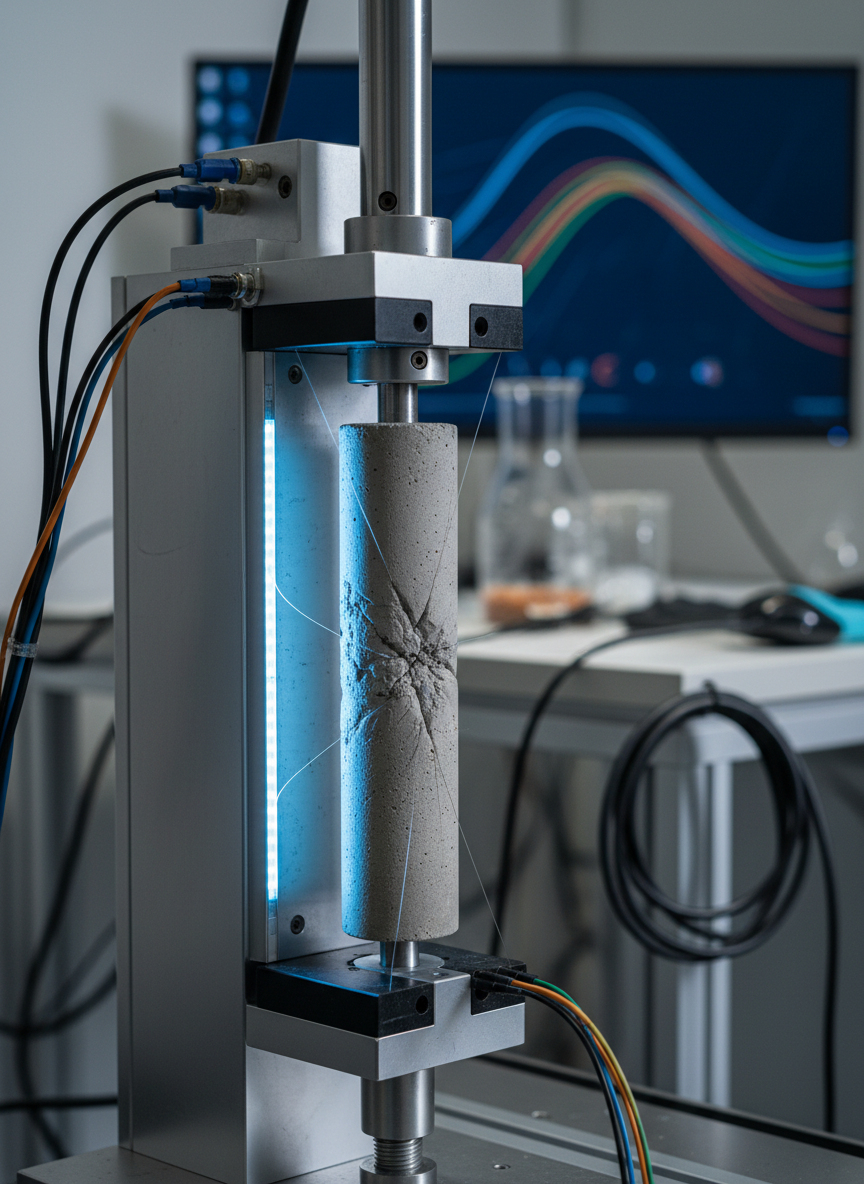
A close-up, photographic realist shot of an advanced materials testing setup for net-zero concrete: a compact mechanical testing machine firmly gripping a slim concrete cylinder with embedded fiber sensors. Fine hairline cracks radiate delicately from the loading point, highlighted by directional side lighting from a cool LED strip. The background is softly blurred, showing hints of lab instruments, data acquisition cables, and a glowing computer monitor with abstracted graph-like colors. Captured from a slightly low angle to emphasize the precision of the equipment, with a shallow depth of field that keeps the specimen in crystal-clear focus. The mood is technical and meticulous, conveying high-level academic research and performance evaluation of green binders and low-carbon concretes.

Research Trajectory

Charting key roles, collaborations, and breakthroughs shaping low‑carbon cement and net‑zero concrete innovation.

About

Academic Journey in Sustainable Materials

I am a Senior Lecturer in the Department of Architecture & Civil Engineering at the University of Bath, where my work sits at the interface of materials science, structural engineering, and data-driven design. Trained as a civil/structural engineer, my early research focused on understanding the fundamental behaviour of cementitious materials and concrete systems. Over time, this evolved into a clear thematic commitment: reducing the carbon footprint of infrastructure by rethinking what concrete is made from, how it is designed, and how it performs over its full life cycle. My portfolio now centres on three interconnected strands. First, I develop net-zero concrete and green binders by replacing clinker with industrial by-products and secondary raw materials, underpinned by rigorous experimental and microstructural characterisation. Second, I work on waste valorisation, transforming construction, industrial, and municipal wastes into high-performance, durable binders and composite systems. Third, I integrate AI-driven methods—such as machine learning, optimisation, and digital twins—into materials design and structural performance prediction, enabling faster, more reliable pathways to low-carbon engineering solutions. Recognition such as being named a Top 50 Women in Engineering winner reflects both the technical impact and translational reach of this work, which is closely aligned with industry partners, standardisation efforts, and net-zero roadmaps. Across publications, grants, and collaborations, my trajectory is guided by a consistent aim: to bridge academic innovation and real-world application in sustainable construction, providing actionable pathways towards net-zero infrastructure.
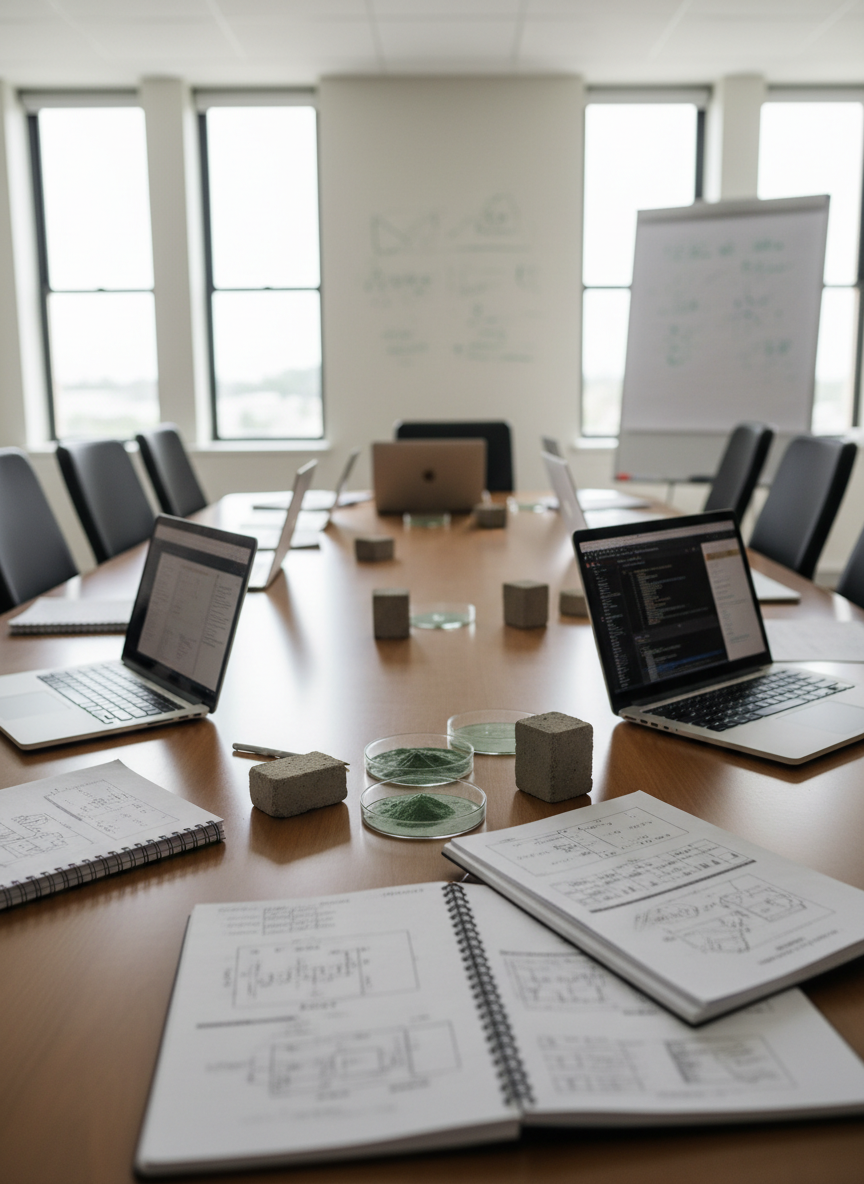
An elegant, wide-angle view of a bright university meeting room, centered on a large wooden conference table covered with open laptops, technical reports, and a few neatly stacked lab notebooks showing dense scientific plots and diagrams. Alongside them, small concrete prisms and petri dishes with powdered green binder materials are carefully arranged as visual props. Soft, diffused daylight from floor-to-ceiling windows illuminates the table, creating subtle reflections on the laptop casings and a calm, focused atmosphere. The background shows a blurred whiteboard filled with faint formula-like shapes. Photographic realism, eye-level composition, and balanced framing communicate a professional academic environment dedicated to net-zero concrete research and AI-driven materials discovery.
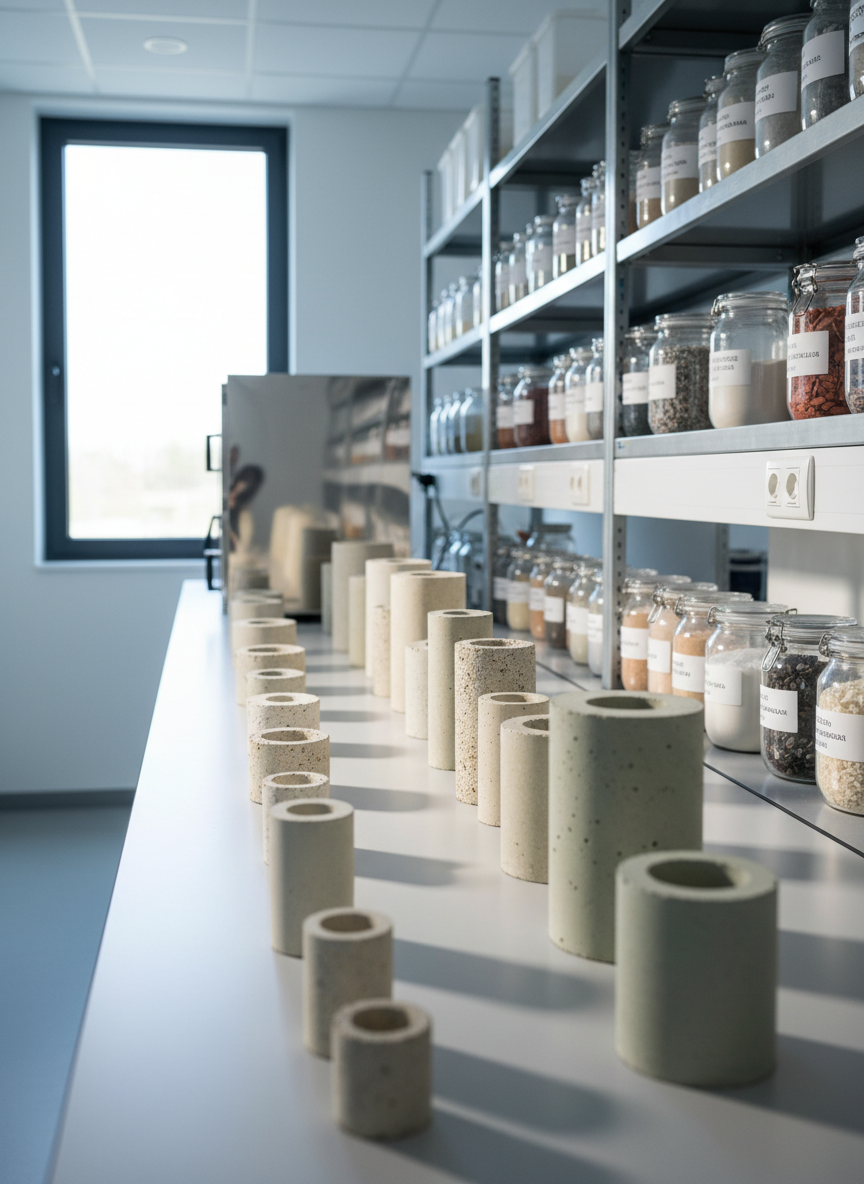
A sleek, modern research workspace focused on sustainable concrete innovation, with a long light-grey lab bench covered in neatly arranged cylindrical concrete samples of varying textures and subtle color tones from pale off-white to soft greenish-grey. In the background, tall shelves hold labeled containers of mineral powders and recycled aggregates, all slightly blurred. Cool daylight streams through a large window, creating crisp reflections on a stainless-steel surface and casting gentle shadows behind the samples. Captured at eye level with a shallow depth of field, the composition feels precise and professional. Photographic realism with a clean, minimalist aesthetic emphasizes cutting-edge academic research and low-carbon engineering.
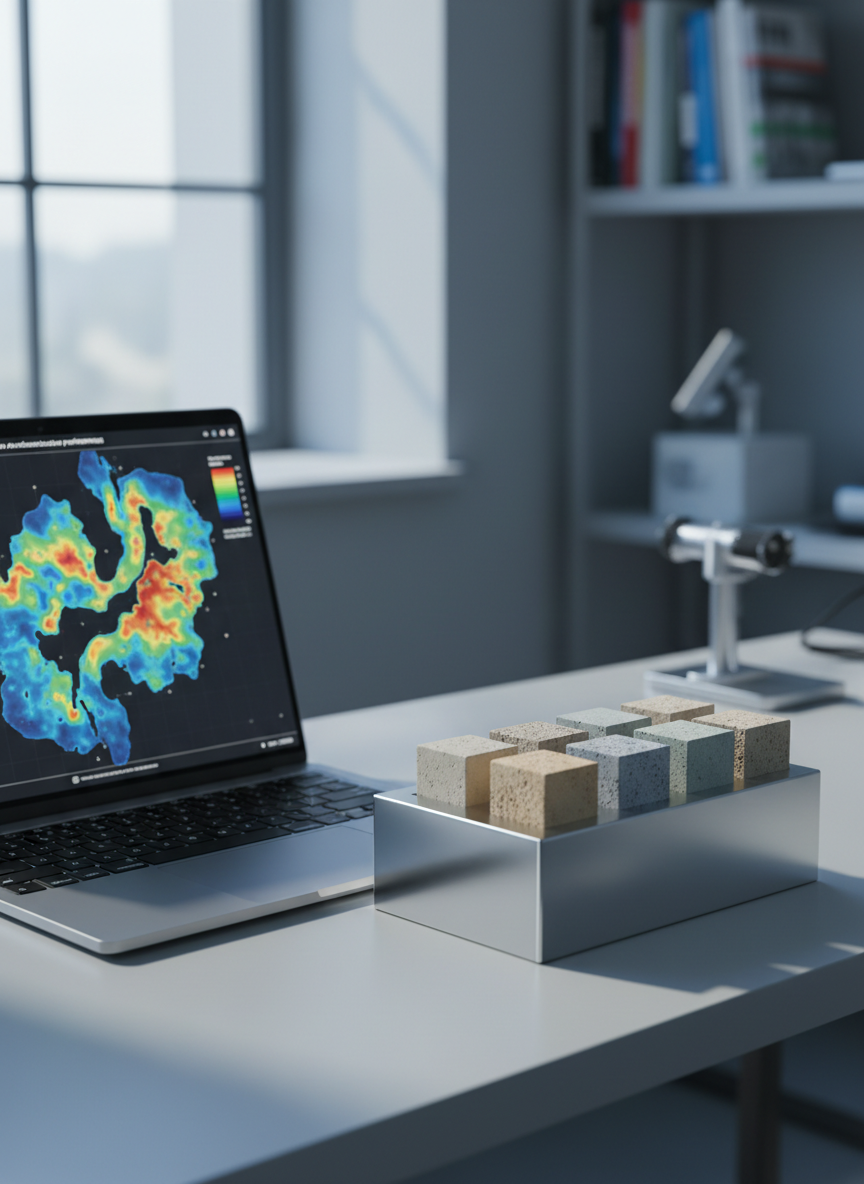
A sophisticated visualization of AI-driven materials research, showing a high-resolution laptop on a tidy lab desk displaying a colorful, abstract 3D heatmap of concrete microstructure performance, with no legible text. Next to it, a polished metal sample holder presents several miniature concrete cubes, each with slightly different surface textures and hues representing varied low-carbon mix designs. Soft, cool daylight from a nearby window mixes with the subtle glow of the laptop screen, casting gentle gradients of light across the desk. Shot from a slightly elevated angle, with moderate depth of field so that both the digital model and physical samples are sharp. The atmosphere is innovative and forward-looking, conveying how artificial intelligence supports the optimization of net-zero concrete formulations.
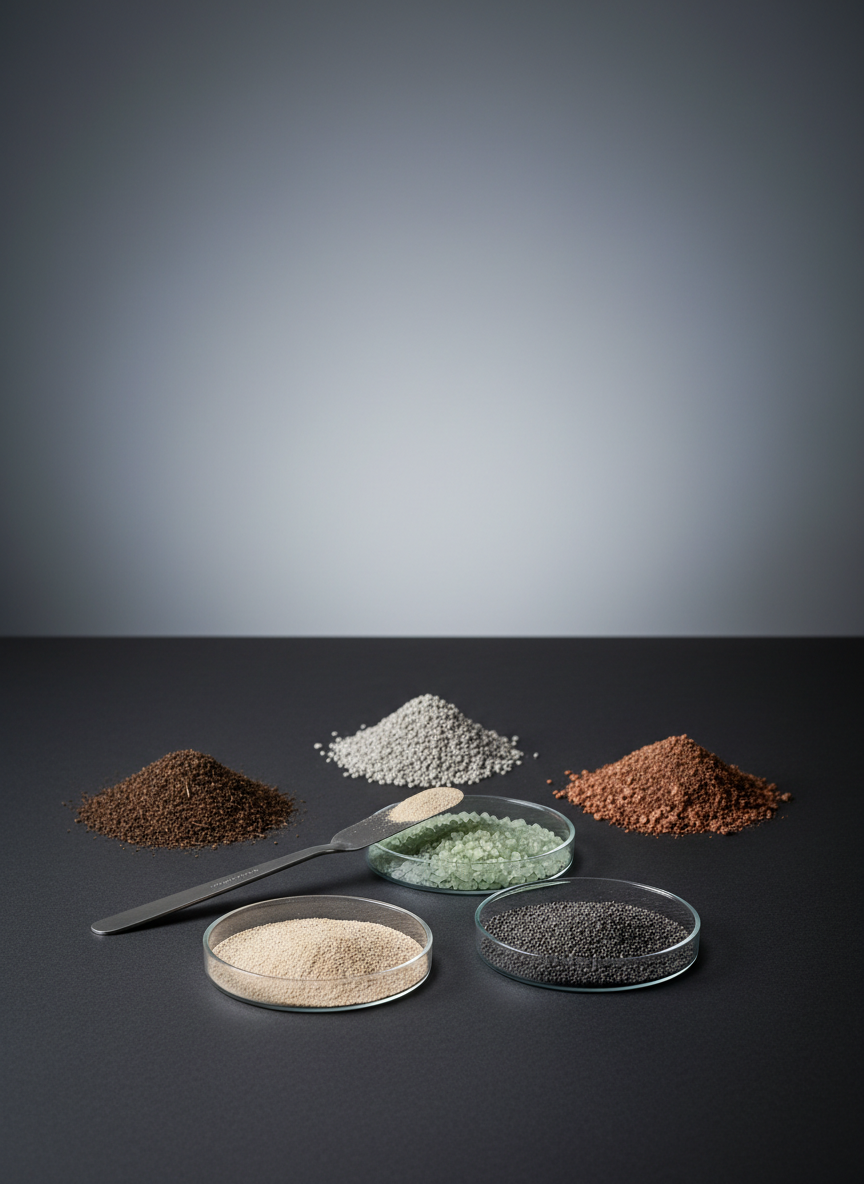
A meticulously arranged, photographic realism still life of sustainable cementitious materials on a dark matte lab surface: shallow glass dishes hold finely ground supplementary cementitious powders in muted tones of beige, pale green, and charcoal, next to small piles of recycled aggregates and crushed waste by-products used for valorisation. A slender steel spatula rests diagonally across the scene, adding a precise, experimental touch. Overhead neutral lighting creates gentle, even illumination with soft shadows that emphasize subtle textures and particle sizes. The background fades into a smooth, out-of-focus gradient of cool greys, keeping attention on the materials. Composed using the rule of thirds with a calm, methodical mood, ideal for illustrating green binders and waste valorisation research.
A close-up, photographic realist shot of an advanced materials testing setup for net-zero concrete: a compact mechanical testing machine firmly gripping a slim concrete cylinder with embedded fiber sensors. Fine hairline cracks radiate delicately from the loading point, highlighted by directional side lighting from a cool LED strip. The background is softly blurred, showing hints of lab instruments, data acquisition cables, and a glowing computer monitor with abstracted graph-like colors. Captured from a slightly low angle to emphasize the precision of the equipment, with a shallow depth of field that keeps the specimen in crystal-clear focus. The mood is technical and meticulous, conveying high-level academic research and performance evaluation of green binders and low-carbon concretes.

Highlights

Ke collaborates widely with industry and international laboratories, delivers invited keynotes on sustainable binders and AI‑driven materials, and serves on technical committees and editorial boards advancing low‑carbon concrete standards and waste‑valorisation practices worldwide.