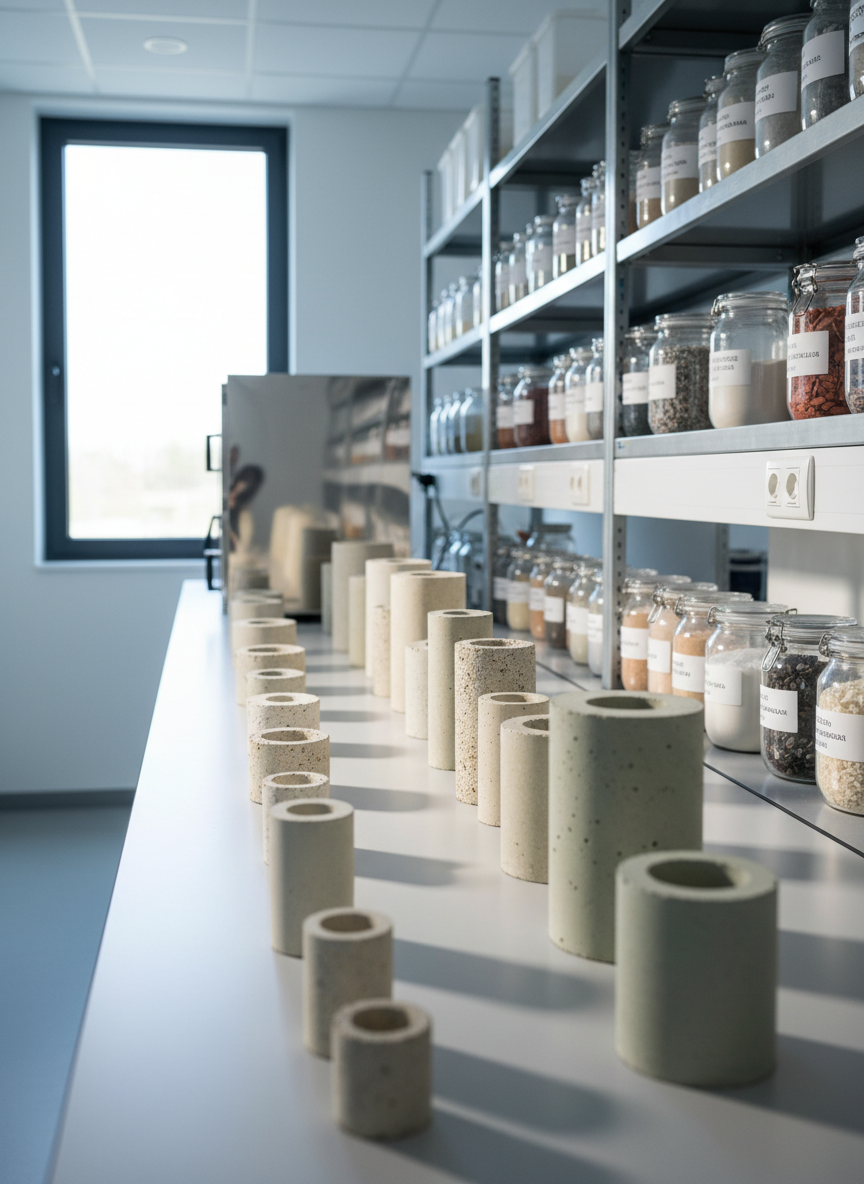
A sleek, modern research workspace focused on sustainable concrete innovation, with a long light-grey lab bench covered in neatly arranged cylindrical concrete samples of varying textures and subtle color tones from pale off-white to soft greenish-grey. In the background, tall shelves hold labeled containers of mineral powders and recycled aggregates, all slightly blurred. Cool daylight streams through a large window, creating crisp reflections on a stainless-steel surface and casting gentle shadows behind the samples. Captured at eye level with a shallow depth of field, the composition feels precise and professional. Photographic realism with a clean, minimalist aesthetic emphasizes cutting-edge academic research and low-carbon engineering.

Research Outputs

Explore publications, software tools, guidelines, and case studies demonstrating advances in net‑zero concrete and sustainable materials.

About

Transforming Concrete for Net‑Zero Infrastructure

Dr Xinyuan Ke’s research delivers measurable carbon reductions in concrete, turning industrial waste into high‑performance green binders and using AI to optimise mix designs, informing standards, demonstrators, and collaborations that accelerate scalable, net‑zero infrastructure worldwide.
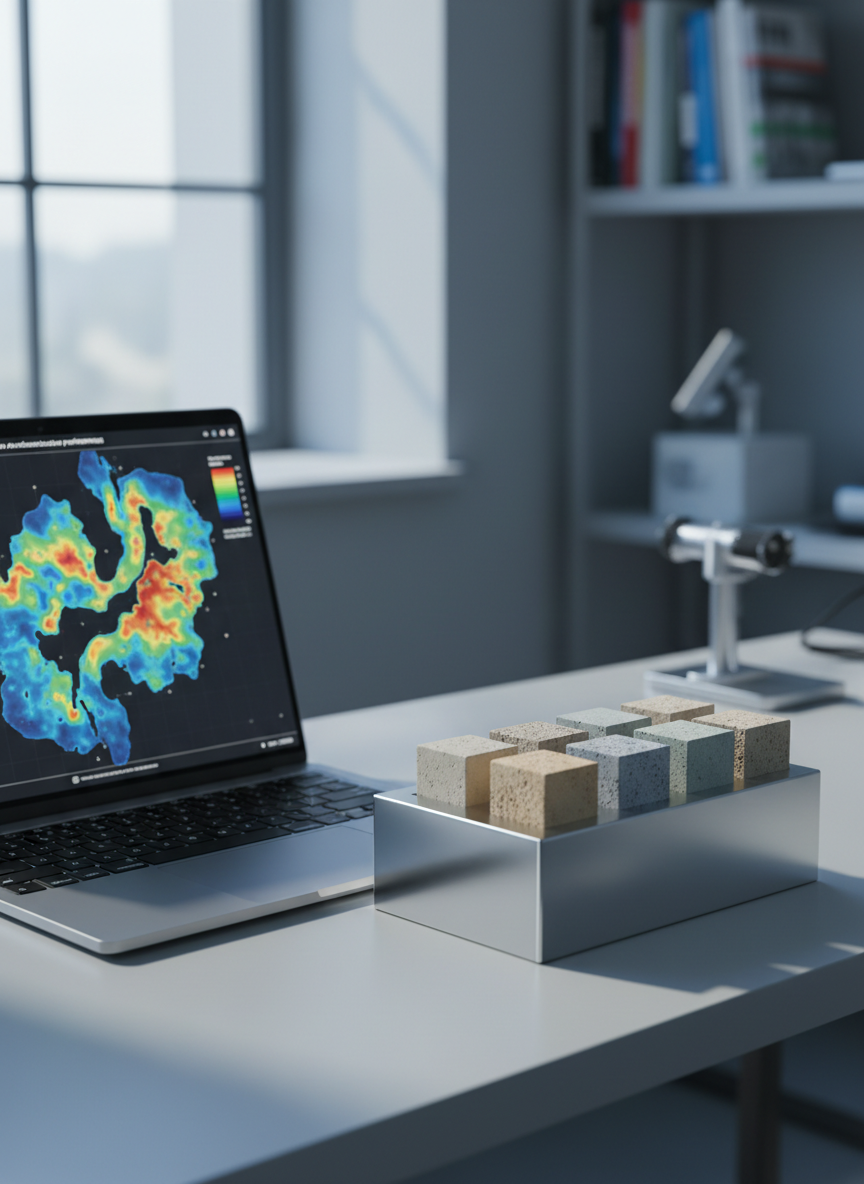
A sophisticated visualization of AI-driven materials research, showing a high-resolution laptop on a tidy lab desk displaying a colorful, abstract 3D heatmap of concrete microstructure performance, with no legible text. Next to it, a polished metal sample holder presents several miniature concrete cubes, each with slightly different surface textures and hues representing varied low-carbon mix designs. Soft, cool daylight from a nearby window mixes with the subtle glow of the laptop screen, casting gentle gradients of light across the desk. Shot from a slightly elevated angle, with moderate depth of field so that both the digital model and physical samples are sharp. The atmosphere is innovative and forward-looking, conveying how artificial intelligence supports the optimization of net-zero concrete formulations.

Highlights

Recognition

Recognised as a Top 50 Women in Engineering winner, Dr Ke’s work on net‑zero concrete underpins new standards, informs infrastructure policy, guides industrial demonstrators, and features in professional press and international sustainability reports.
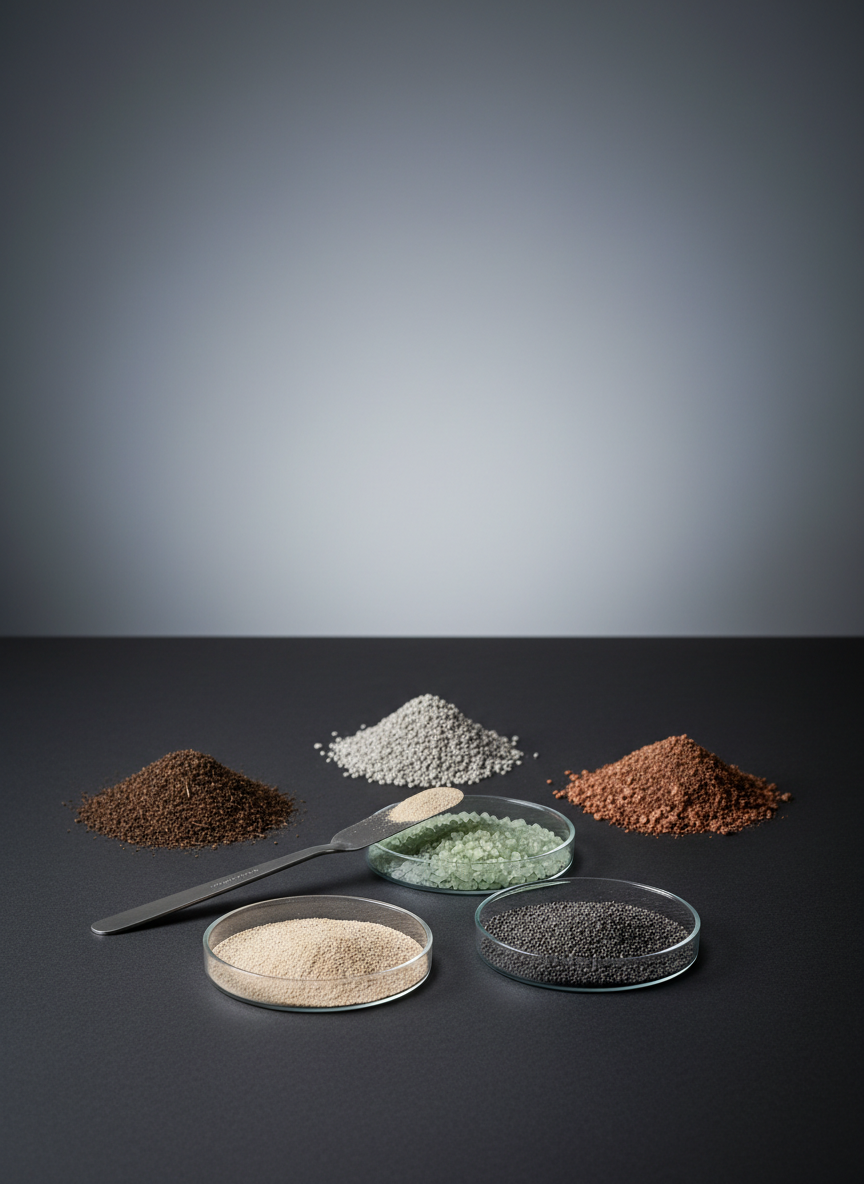
A meticulously arranged, photographic realism still life of sustainable cementitious materials on a dark matte lab surface: shallow glass dishes hold finely ground supplementary cementitious powders in muted tones of beige, pale green, and charcoal, next to small piles of recycled aggregates and crushed waste by-products used for valorisation. A slender steel spatula rests diagonally across the scene, adding a precise, experimental touch. Overhead neutral lighting creates gentle, even illumination with soft shadows that emphasize subtle textures and particle sizes. The background fades into a smooth, out-of-focus gradient of cool greys, keeping attention on the materials. Composed using the rule of thirds with a calm, methodical mood, ideal for illustrating green binders and waste valorisation research.