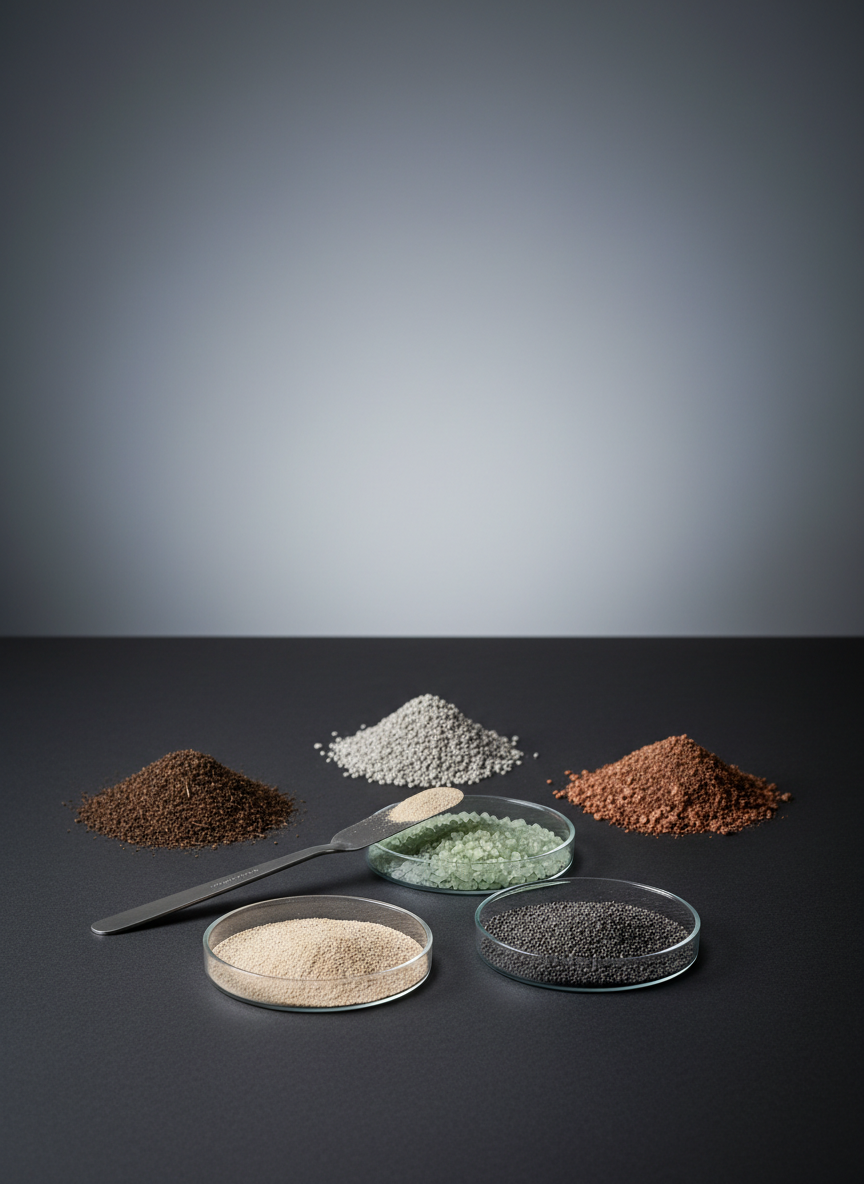
A meticulously arranged, photographic realism still life of sustainable cementitious materials on a dark matte lab surface: shallow glass dishes hold finely ground supplementary cementitious powders in muted tones of beige, pale green, and charcoal, next to small piles of recycled aggregates and crushed waste by-products used for valorisation. A slender steel spatula rests diagonally across the scene, adding a precise, experimental touch. Overhead neutral lighting creates gentle, even illumination with soft shadows that emphasize subtle textures and particle sizes. The background fades into a smooth, out-of-focus gradient of cool greys, keeping attention on the materials. Composed using the rule of thirds with a calm, methodical mood, ideal for illustrating green binders and waste valorisation research.

Research Focus

Net-zero concrete, green binders, and AI-driven materials underpin Dr Ke’s sustainable construction research.

About

Research Lines in Sustainable Materials

Dr Xinyuan Ke’s research integrates net-zero concrete, green binders, and AI-driven materials to deliver low-carbon infrastructure. Her work advances fundamental understanding while enabling practical design tools for industry and policy. Explore publications and metrics to see the full track record.
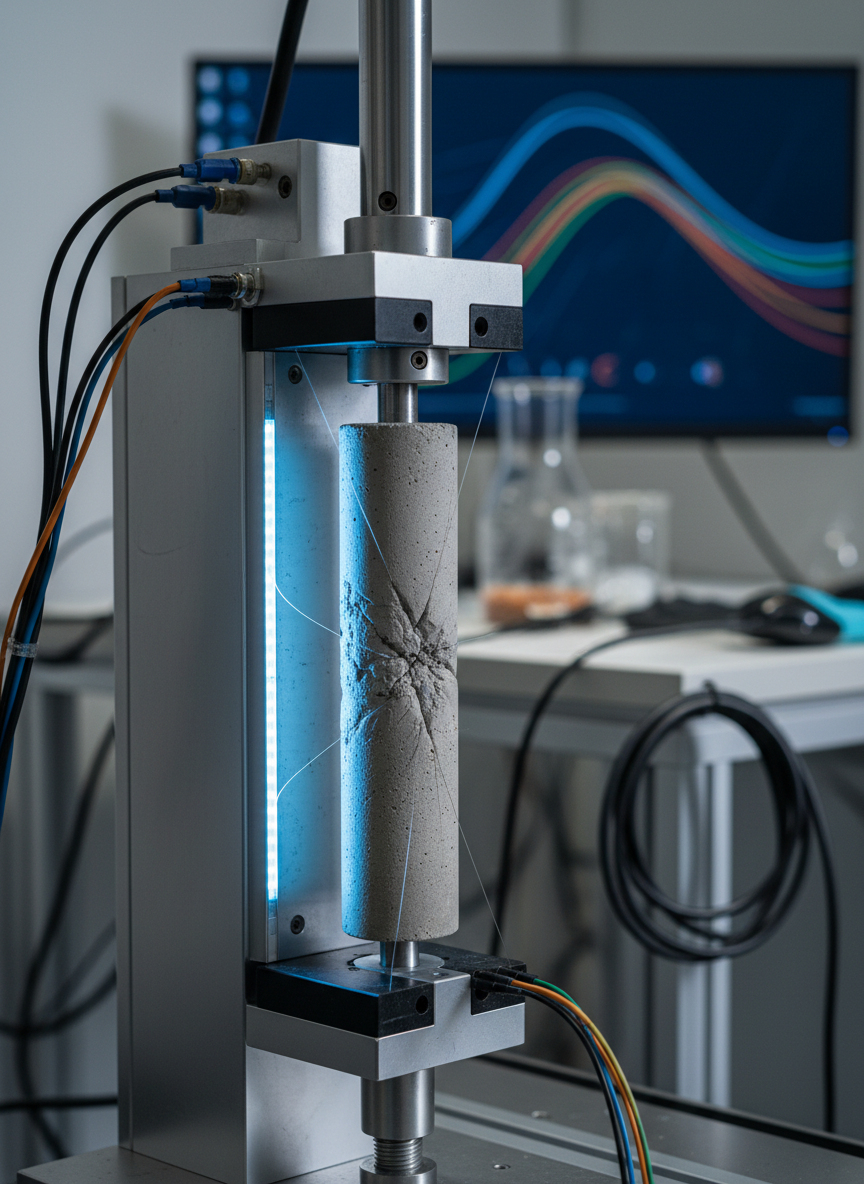
A close-up, photographic realist shot of an advanced materials testing setup for net-zero concrete: a compact mechanical testing machine firmly gripping a slim concrete cylinder with embedded fiber sensors. Fine hairline cracks radiate delicately from the loading point, highlighted by directional side lighting from a cool LED strip. The background is softly blurred, showing hints of lab instruments, data acquisition cables, and a glowing computer monitor with abstracted graph-like colors. Captured from a slightly low angle to emphasize the precision of the equipment, with a shallow depth of field that keeps the specimen in crystal-clear focus. The mood is technical and meticulous, conveying high-level academic research and performance evaluation of green binders and low-carbon concretes.
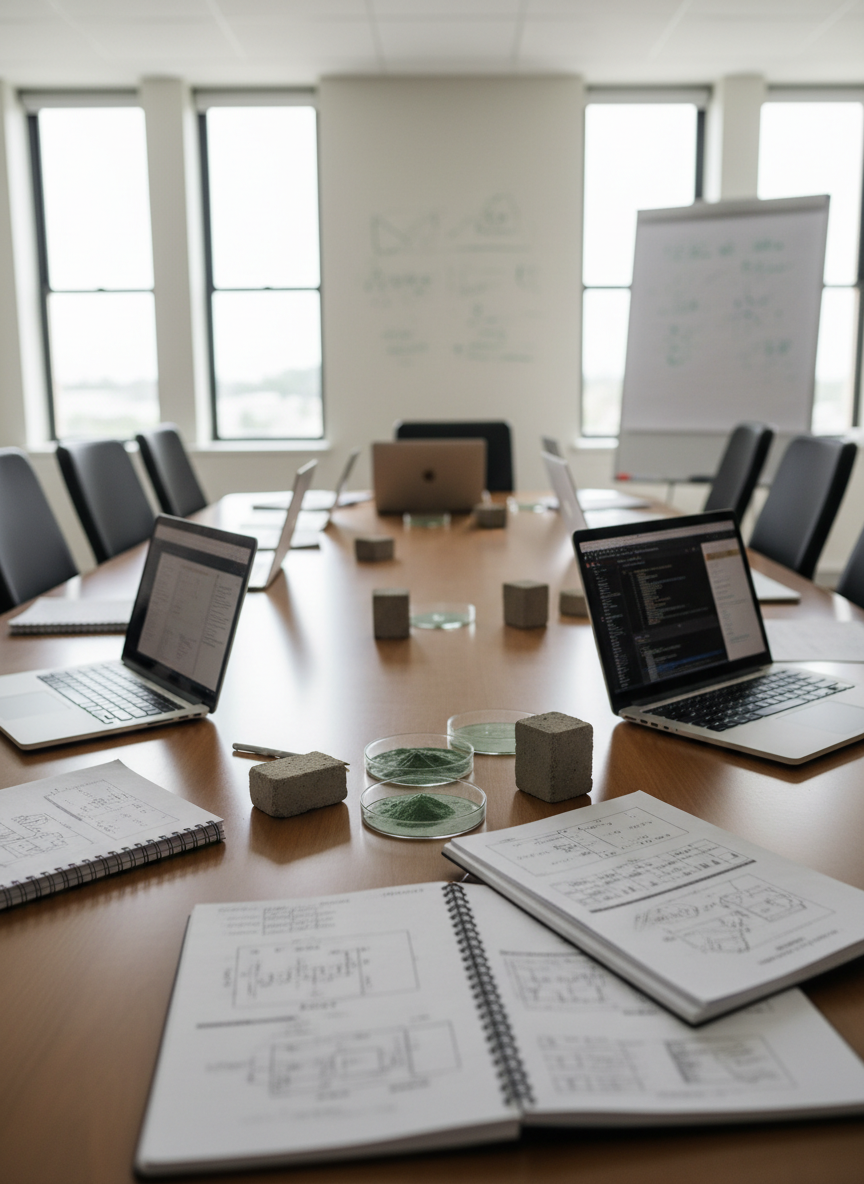
An elegant, wide-angle view of a bright university meeting room, centered on a large wooden conference table covered with open laptops, technical reports, and a few neatly stacked lab notebooks showing dense scientific plots and diagrams. Alongside them, small concrete prisms and petri dishes with powdered green binder materials are carefully arranged as visual props. Soft, diffused daylight from floor-to-ceiling windows illuminates the table, creating subtle reflections on the laptop casings and a calm, focused atmosphere. The background shows a blurred whiteboard filled with faint formula-like shapes. Photographic realism, eye-level composition, and balanced framing communicate a professional academic environment dedicated to net-zero concrete research and AI-driven materials discovery.

Strands

Research strands span material design, digital optimisation, and infrastructure performance, supporting collaboration with academics, industry, and policymakers. Opportunities include joint projects, doctoral and postdoctoral supervision, advisory roles, and consultancy on low-carbon concrete specification, testing, and implementation.

About

Interconnected Research Theme Map

The diagram illustrates how net-zero concrete, green binders, AI-driven materials, and waste valorisation intersect to enable low-carbon engineering solutions, linking laboratory innovation, multi-scale modelling, and real-world infrastructure projects across buildings, transport networks, and energy systems.
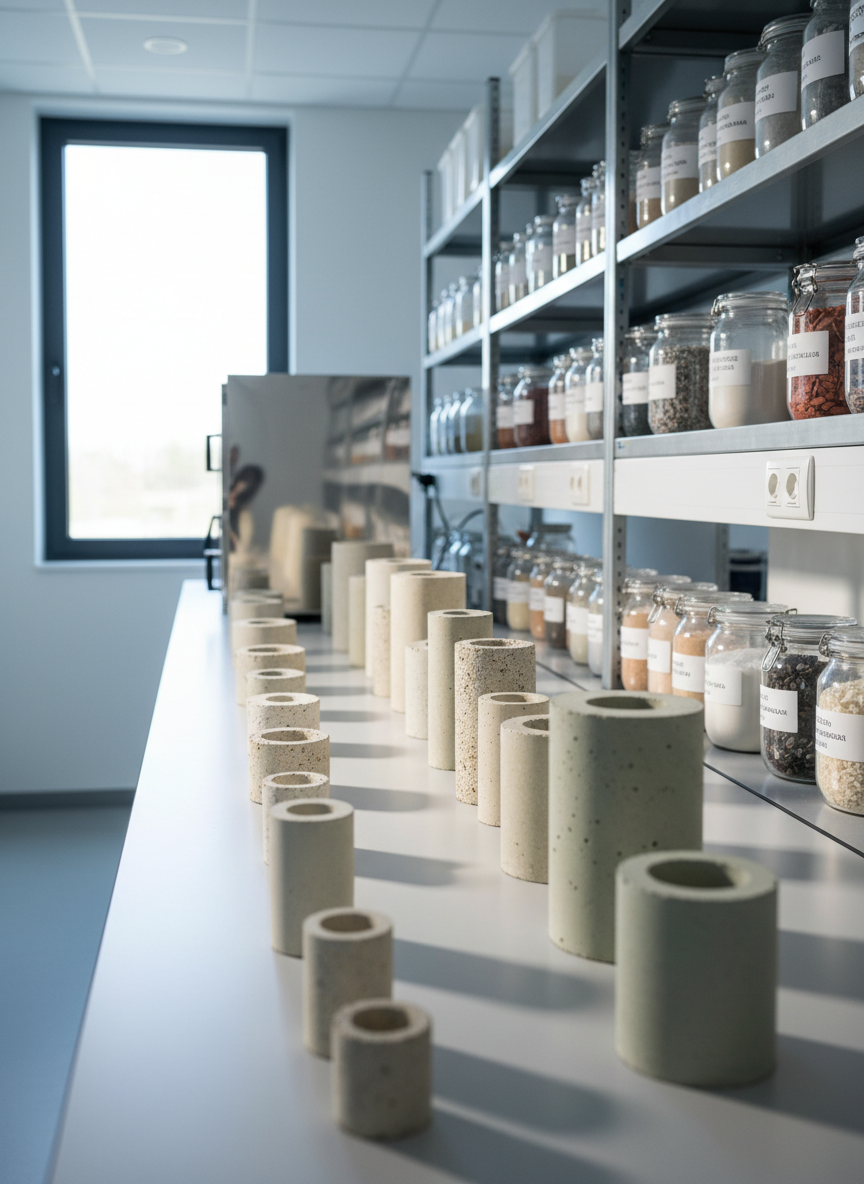
A sleek, modern research workspace focused on sustainable concrete innovation, with a long light-grey lab bench covered in neatly arranged cylindrical concrete samples of varying textures and subtle color tones from pale off-white to soft greenish-grey. In the background, tall shelves hold labeled containers of mineral powders and recycled aggregates, all slightly blurred. Cool daylight streams through a large window, creating crisp reflections on a stainless-steel surface and casting gentle shadows behind the samples. Captured at eye level with a shallow depth of field, the composition feels precise and professional. Photographic realism with a clean, minimalist aesthetic emphasizes cutting-edge academic research and low-carbon engineering.